

close
Choose Your Site
Global
Social Media

Views: 0 Author: Site Editor Publish Time: 2026-07-24 Origin: Site


Is your office chair supporting you through long workdays, or quietly causing fatigue and discomfort? Many professionals now spend six to eight hours sitting each day, making the office chair one of the most important pieces of equipment in any workspace. When seating lacks proper support, it can lead to poor posture, back tension, and reduced focus over time.
Today’s market offers many types of office chair designs, including ergonomic, executive, mesh, and task chairs. Each type serves a different purpose depending on the workspace and the amount of time spent sitting. In this guide, we explore these office chair options and help you understand which one works best for comfort, productivity, and everyday work environments.
A high-quality office chair does more than provide a place to sit. It directly influences posture, comfort, and the ability to focus on work for extended periods. When a chair supports the body correctly, it reduces stress on the spine and encourages a natural sitting position. This improves both physical comfort and mental concentration during daily tasks.
One of the most important functions of an office chair is maintaining spinal alignment. The human spine has a natural “S” curve that must be supported during sitting. Without proper lumbar support, the lower back often collapses forward. Over time, this posture compresses spinal discs and causes lower back discomfort. Ergonomic chairs address this problem by supporting the lumbar region and encouraging upright posture.
Productivity is also closely linked to seating comfort. Workers who experience discomfort frequently shift positions or stand up to relieve strain. These interruptions reduce workflow efficiency and break concentration. A supportive office chair minimizes these distractions and allows users to remain focused for longer periods.
Another important factor is long-term cost efficiency. Budget chairs may appear economical at first, but they often wear out quickly due to low-density foam or weak structural frames. Replacing multiple inexpensive chairs over time can cost more than investing in a durable ergonomic model.
Office Chair Type | Typical Lifespan | Replacement Frequency |
Budget chair | 2–3 years | High |
Mid-range ergonomic chair | 4–6 years | Moderate |
Premium ergonomic chair | 7–10 years | Low |
Organizations furnishing offices for large teams often prioritize durability and ergonomic performance to reduce long-term replacement costs.
Different workplaces require different seating solutions. The design of an office chair often reflects the environment where it will be used. Some chairs prioritize mobility, others focus on posture support, while some emphasize aesthetics and executive presence.
Ergonomic chairs are designed specifically to support the body during long sitting periods. They usually include adjustable lumbar support, flexible backrests, headrests, and adjustable armrests. These features allow users to customize the chair according to their body size and working position.
Professionals who work eight hours or more at a desk typically benefit the most from ergonomic seating. By supporting the spine and allowing small movements throughout the day, these chairs reduce fatigue and improve long-term comfort.
Task chairs are the most common type of office chair used in shared workspaces and home offices. They are compact, lightweight, and designed for flexible daily tasks. Most task chairs include height adjustment, swivel movement, and basic tilt functionality.
Because of their smaller size, task chairs fit easily into tight workspaces. They are also generally more affordable than advanced ergonomic models, making them a popular choice for startups, small offices, and remote work setups.
Executive chairs combine comfort with visual authority. They typically feature tall backrests, thick cushioning, and premium materials such as leather upholstery. These chairs are often placed in executive offices, conference rooms, or leadership workspaces.
Although executive chairs provide strong back support and luxurious comfort, some models emphasize appearance more than ergonomic adjustability. Buyers should evaluate whether a chair offers both comfort and functional support.
Mesh office chairs have become increasingly popular in modern workplaces. Instead of padded upholstery, these chairs use breathable mesh fabric for the backrest. This material improves airflow and prevents heat buildup during long sitting sessions.
Mesh chairs are especially useful in warm climates or offices where ventilation is important. Many ergonomic models combine mesh backs with cushioned seats to balance breathability and comfort.
In addition to common categories, several specialized office chair designs serve unique work environments. Drafting chairs are taller than standard seating and include a footrest ring for support. These chairs are commonly used with standing desks or elevated workstations.
Kneeling chairs encourage a forward sitting posture that distributes body weight between the hips and knees. This design reduces pressure on the lower back and promotes active sitting. Gaming chairs, originally designed for gaming environments, have also entered office spaces. They often include reclining backrests, head pillows, and bold visual designs. However, not all gaming chairs provide the same ergonomic precision as dedicated office seating.
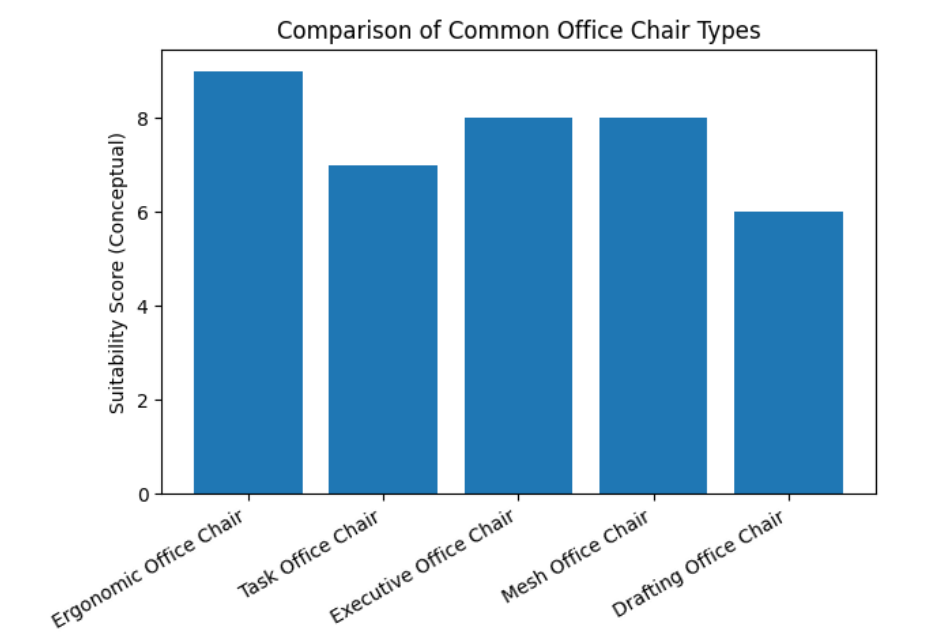
The best office chair depends largely on the environment where it will be used. Different work scenarios require different seating features.
Workspace Type | Recommended Chair | Key Benefit |
Corporate office | Ergonomic chair | Long-term posture support |
Home office | Task or ergonomic chair | Flexibility and comfort |
Executive workspace | Executive chair | Professional appearance |
Design studio | Drafting chair | Height compatibility |
Small workspace | Compact task chair | Space efficiency |
Professionals who spend long hours working on computers benefit most from ergonomic seating. These chairs offer multiple adjustment points that allow users to maintain a neutral sitting posture throughout the day.
Home offices often require flexible seating solutions that balance comfort and affordability. A mid-range ergonomic chair or a high-quality task chair can provide sufficient support without requiring a large investment.
Corporate environments usually standardize seating across departments. Many companies choose mid-range ergonomic chairs because they provide a balance between cost efficiency and employee comfort.
Creative studios or design environments may require drafting chairs that accommodate elevated work surfaces. These chairs allow workers to alternate between sitting and standing positions while maintaining proper posture.
The design of an office chair determines how effectively it supports the body. Several features play a major role in comfort and usability.
Adjustability is one of the most important characteristics of modern office chairs. Features such as adjustable seat height, tilt mechanisms, lumbar depth controls, and armrest positioning allow the chair to adapt to different users. This flexibility ensures that the chair supports the body rather than forcing the user to adapt to the chair.
Lumbar support helps maintain the natural curve of the lower spine. Without proper support, users often lean forward or slump in the seat. Adjustable lumbar systems allow the support to move vertically or horizontally to match the user’s body shape.
Seat depth influences how well the thighs are supported. If the seat is too short, it provides insufficient leg support. If it is too deep, it places pressure on the back of the knees. Adjustable seat sliders allow users to maintain a comfortable distance between the seat edge and the knees.
Reclining mechanisms also play an important role in reducing spinal pressure. Slight reclining positions help distribute body weight and relieve tension in the lower back.
The materials used in an office chair influence both comfort and durability. Upholstery fabrics, cushioning density, and frame construction determine how long the chair remains supportive.
Mesh materials improve airflow and reduce heat buildup during extended sitting sessions. Fabric upholstery provides softer cushioning and a wider range of design styles. Leather surfaces offer a premium appearance and are easier to clean but may retain heat in warmer environments.
Structural components also affect durability. High-quality chairs typically use steel or reinforced aluminum frames that provide long-term stability. Strong base construction and high-density foam cushioning extend the lifespan of the chair.
Businesses furnishing large offices often evaluate material durability carefully because high-traffic environments place greater stress on seating furniture.
Selecting the right office chair requires balancing several factors, including work duration, workspace layout, and ergonomic needs.
First, evaluate how long the chair will be used each day. Workers who spend full workdays at a desk should prioritize ergonomic seating with lumbar support and adjustable features. For occasional use, a simpler task chair may provide sufficient comfort.
Second, consider body proportions. Seat height, backrest size, and weight capacity should match the user’s physical dimensions. Chairs that are too small or too large can create posture problems even if they include ergonomic features.
Budget planning is also important. While premium chairs provide advanced features, mid-range ergonomic models often deliver the best balance between price and performance for most workplaces.
Testing a chair before purchasing is always recommended. Sitting for several minutes allows users to evaluate seat cushioning, back support, and adjustment controls.
Many buyers focus on appearance rather than functionality when selecting an office chair. While aesthetics matter in professional environments, ergonomic performance should remain the primary consideration.
Another common mistake is ignoring adjustability. Fixed armrests or non-adjustable lumbar support limit the chair’s ability to accommodate different body shapes. This can lead to discomfort even if the chair appears comfortable at first.
Buyers also sometimes overlook durability factors such as frame strength and warranty coverage. Chairs used in commercial environments must withstand continuous daily use. Evaluating structural quality ensures the seating investment remains reliable for years.
The office furniture industry continues to evolve as work environments change. One emerging trend involves smart ergonomic technology. Some advanced chairs include sensors that monitor posture and remind users to adjust their sitting position.
Sustainability is another growing focus. Manufacturers increasingly use recycled plastics, sustainable fabrics, and eco-friendly production methods to reduce environmental impact.
Hybrid seating designs are also becoming popular in flexible workspaces. These chairs combine ergonomic support with active sitting elements that encourage movement during the workday.
Choosing the right office chair depends on how the workspace is used and how long people sit each day. Ergonomic chairs support posture for long work sessions, while task and mesh chairs provide flexible comfort for daily office environments.
Understanding these office chair types helps buyers make better decisions. OK-BUY offers reliable seating solutions designed for comfort, durability, and practical workplace performance.
A: An ergonomic office chair is best because it supports posture, lumbar alignment, and adjustable comfort.
A: Choose an office chair based on work hours, desk height, and ergonomic support needs.
A: Yes. A mesh office chair improves airflow and keeps users cooler during long sitting sessions.
A: A task office chair is compact and flexible, while ergonomic models offer more adjustability.
A: A quality office chair usually ranges from $150–$400 depending on materials and ergonomic features.
