

close
Choose Your Site
Global
Social Media

Views: 0 Author: Site Editor Publish Time: 2026-07-24 Origin: Site


Do you sit for hours every day at work? Many people do. Long sitting can cause pain and fatigue. Without support, the body becomes tired quickly. This is why a good office chair matters in modern work.
A proper office chair supports posture and comfort. It helps the spine stay aligned. Muscles relax and pressure decreases. Workers feel less strain during long desk hours.
In this article, we explore the benefits of an office chair. You will learn how it supports health, comfort, and productivity at work.
The modern workplace relies heavily on digital tools, computers, and online communication. Many professionals now spend six to eight hours each day sitting at a desk. Remote work has also increased the amount of time people remain seated while working, attending meetings, or completing digital tasks.
Because of this shift, the quality of workplace seating has become more important than ever. When people sit in chairs that lack proper support, the spine tends to collapse into a slouched position. This posture places extra pressure on the lower back and neck. Over time, muscles begin to fatigue as they attempt to compensate for the lack of structural support.
A properly designed office chair helps address these problems by supporting the natural structure of the body. It stabilizes the pelvis, aligns the spine, and allows workers to maintain a comfortable posture even during extended work sessions. As a result, employees experience fewer interruptions caused by discomfort and can maintain focus for longer periods.
Daily office work involves repetitive movements such as typing, reading documents, attending video meetings, and writing reports. Each of these tasks requires stable body positioning and support for the arms and upper body. Without appropriate seating, workers often lean forward, hunch their shoulders, or twist their bodies to reach their workspace.
An office chair designed for ergonomic use helps maintain a balanced working posture. Adjustable height allows the chair to align with the desk, ensuring that the elbows remain close to the work surface. Armrests provide support for the forearms during typing, which reduces tension in the shoulders and neck.
Over time, these ergonomic improvements make daily work more comfortable. Instead of constantly shifting position to find relief, workers can maintain a stable and productive posture while completing their tasks.
Many people assume that any chair can function as workplace seating. However, there is a significant difference between a standard household chair and a purpose-built office chair. Traditional chairs are designed for short-term sitting during meals or casual activities, while office chairs are engineered for extended use.
Feature | Regular Chair | Office Chair |
Height Adjustment | Usually fixed | Adjustable |
Lumbar Support | Minimal | Designed for spine |
Mobility | Limited | Wheels and swivel |
Sitting Duration | Short periods | Long sessions |
Ergonomic Design | Basic | Advanced support |
These differences explain why many organizations invest in ergonomic seating. A dedicated office chair is designed specifically to support the body during long periods of desk work.
Poor seating has become one of the most common contributors to workplace discomfort. When the spine is unsupported, muscles must work harder to maintain posture. This continuous effort eventually leads to fatigue and pain, especially in the lower back and shoulders.
A supportive office chair helps prevent these issues by stabilizing the body’s natural alignment. When posture is supported properly, the body requires less effort to remain balanced. Muscles relax, circulation improves, and overall comfort increases. Over time, these improvements contribute to better workplace health and fewer physical complaints.
The human spine naturally forms a gentle S-shaped curve. This structure allows the body to distribute weight evenly and absorb pressure during movement and sitting. When people sit in poorly designed chairs, this natural curve often flattens, which places additional stress on spinal discs.
An ergonomic office chair is designed to maintain this natural spinal alignment. The backrest supports the lumbar region while the seat distributes body weight across the hips and thighs. By maintaining the spine’s natural position, the chair helps reduce pressure on the lower back.
Maintaining spinal alignment is particularly important for people who spend long hours sitting. Over time, proper support reduces the risk of chronic discomfort and helps maintain overall spinal health.
Back pain remains one of the most common physical complaints among office workers. Long periods of sitting can create tension in the neck, shoulders, and upper back if the body is not supported properly.
A well-designed office chair addresses these problems by supporting multiple parts of the body simultaneously. Lumbar support stabilizes the lower back, while adjustable armrests reduce the load placed on the shoulders. In some models, headrests also support the neck when the user reclines.
When these features work together, they reduce strain across the entire upper body. Workers experience fewer aches and can remain comfortable during longer work sessions.
Blood circulation is another important factor affected by workplace seating. Sitting in a poorly designed chair can create pressure behind the knees and restrict blood flow to the lower legs. Over time, this may cause numbness, tingling, or swelling.
Many office chairs incorporate a waterfall seat edge that gently slopes downward near the front of the seat. This design reduces pressure on the thighs and allows blood to circulate more freely. Improved circulation helps maintain comfort during long working hours and prevents the heavy feeling in the legs that often occurs after extended sitting.
Musculoskeletal disorders are a common issue in office environments. These conditions develop gradually when joints and muscles experience repeated strain over time. Poor posture and inadequate seating are often contributing factors.
Using a supportive office chair helps reduce these risks. Adjustable features allow workers to maintain neutral positions for the spine, shoulders, and arms. By minimizing strain on these areas, ergonomic seating plays a role in preventing long-term physical issues.
Although sitting appears static, the human body naturally performs small movements throughout the day. These micro-movements help maintain circulation and prevent stiffness. However, rigid chairs can restrict this natural movement.
Modern office chairs often include tilt and recline mechanisms that allow subtle changes in posture. These adjustments encourage movement while remaining seated. As a result, muscles remain active and pressure on the spine is reduced.
Physical fatigue during desk work often results from muscle strain rather than mental exhaustion. When posture is unsupported, muscles continuously contract to maintain balance.
A supportive office chair reduces this workload by stabilizing the body’s position. The chair absorbs some of the physical strain, allowing muscles to relax. As a result, workers feel less physically tired and maintain higher energy levels throughout the day.
Posture habits develop over time based on the environment in which people work. When workers sit in chairs that support healthy alignment, they naturally maintain better posture without conscious effort.
Over weeks and months, these habits contribute to improved spinal health and overall comfort. Workers become more aware of their posture and adjust their sitting position more effectively.
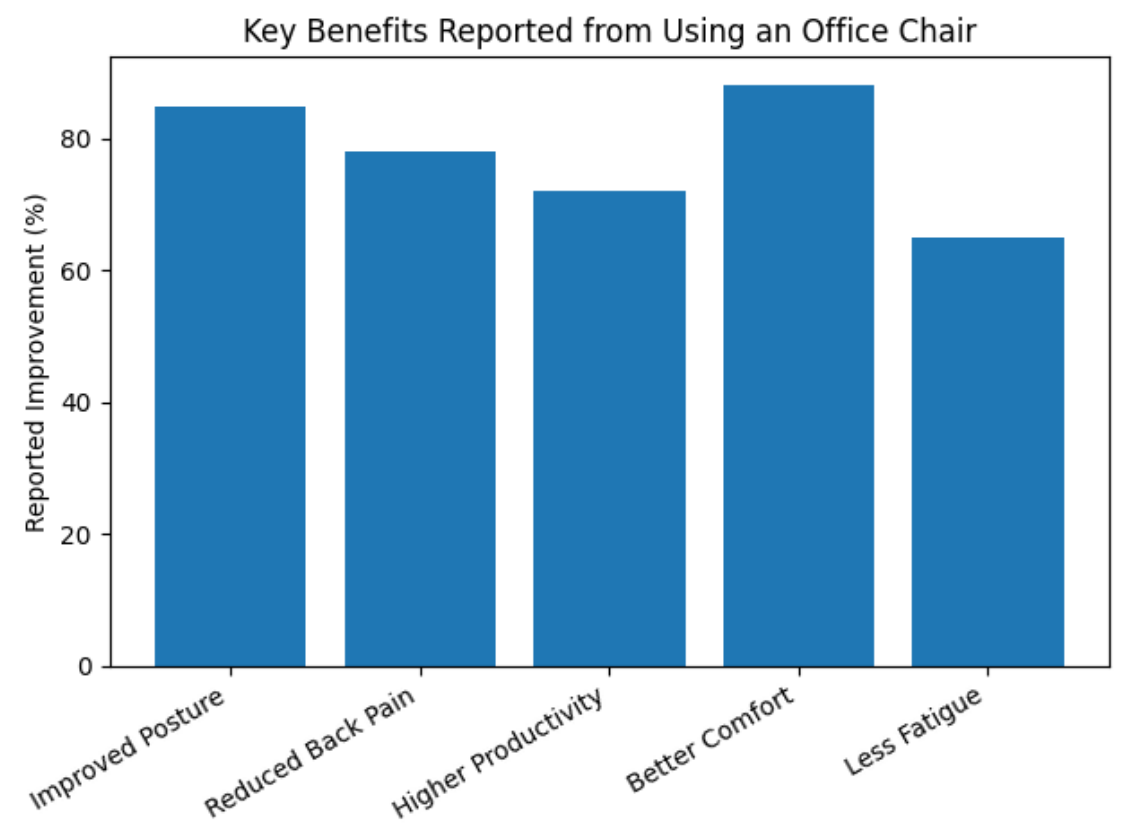
Comfort plays a major role in workplace productivity. When employees feel physically uncomfortable, their attention shifts away from work tasks. Even small amounts of discomfort can create constant distractions that interrupt concentration.
A supportive office chair reduces these distractions by stabilizing the body. Workers can remain seated comfortably for longer periods without needing to constantly change position. This allows them to maintain deeper focus on their work.
Productivity improvements also appear in energy levels throughout the day. Poor seating often causes early fatigue because the body must constantly compensate for lack of support. With proper ergonomic seating, the body remains relaxed and stable, which allows workers to conserve energy.
Companies that invest in ergonomic seating frequently report improvements in employee satisfaction and performance (data requires verification). Comfortable employees typically produce higher quality work and experience fewer interruptions caused by physical discomfort.
The effectiveness of an office chair depends largely on its ergonomic features. These features allow the chair to adapt to different body types and work environments.
Adjustable seat height is one of the most important elements. Proper height ensures that the feet rest flat on the floor and the knees remain at a comfortable angle. This alignment reduces strain on the lower back and legs.
Lumbar support is another critical feature. It maintains the natural curve of the spine and prevents the lower back from collapsing into a slouched position. Without lumbar support, pressure on spinal discs increases significantly.
Armrests also play a vital role in ergonomic seating. Adjustable armrests allow users to support their forearms during typing and desk work. This reduces tension in the shoulders and neck, which are common sources of workplace discomfort.
Tilt and recline mechanisms provide additional flexibility. These features allow workers to shift their posture during the day, which helps relieve pressure on the spine and encourages natural movement.
Different working environments require different seating solutions. Understanding the advantages of each design helps users choose the right office chair for their needs.
Office Chair Type | Ideal Usage | Primary Advantage |
Low-back chair | Short work sessions | Mobility and compact design |
Mid-back chair | General office tasks | Balanced support |
High-back chair | Long desk work | Full upper-body support |
Ergonomic task chair | Dynamic workplaces | High adjustability |
Low-back chairs are compact and lightweight, making them suitable for meeting rooms or temporary workstations. They support the lower spine while allowing greater movement.
Mid-back chairs provide a balance between support and flexibility. They are commonly used in home offices and standard corporate environments where moderate support is required.
High-back chairs offer the highest level of support, including the upper back and neck. These chairs are ideal for professionals who spend most of their day working at a desk.
Task chairs are designed for environments where workers frequently adjust their position. Their high level of adjustability makes them suitable for dynamic workplaces.
Investing in a high-quality office chair may initially appear costly, but it often results in long-term economic benefits. One of the most significant advantages is the potential reduction in health-related workplace costs.
Poor seating can contribute to physical discomfort that leads to medical consultations, therapy, or absenteeism. Ergonomic seating helps prevent these issues by supporting healthy posture and reducing physical strain.
Another benefit is improved employee attendance. Workers who experience less discomfort are less likely to miss work due to posture-related pain. This contributes to consistent productivity and improved team performance.
Employee satisfaction also increases when workplaces prioritize comfort and well-being. Organizations that provide ergonomic seating often experience stronger employee retention and reduced turnover rates.
Finally, high-quality office chairs are typically built to last many years. Durable materials and strong structural components allow them to maintain performance over time. This longevity improves return on investment compared to replacing lower-quality seating repeatedly.
Physical comfort has a direct influence on mental well-being. When workers experience chronic discomfort, their stress levels often increase. Pain creates constant background distraction that affects mood and motivation.
A supportive office chair helps eliminate these stress factors. When the body feels stable and comfortable, workers can concentrate on their tasks without physical distractions.
Better posture can also influence confidence and mental engagement. Sitting upright improves breathing and encourages a more alert working state. Many workers report feeling more focused and motivated when they maintain proper posture.
Comfortable seating also contributes to a positive workplace atmosphere. When employees feel supported by their work environment, morale improves and collaboration becomes easier.
Choosing the right office chair requires evaluating several factors. One of the most important considerations is size and adjustability. A chair should match the user’s body dimensions and provide sufficient adjustment range to accommodate different sitting positions.
Ergonomic features should also be carefully examined. Lumbar support, adjustable armrests, and seat depth adjustment are particularly important for maintaining proper posture during long work sessions.
Material quality is another important factor. Breathable mesh fabrics improve airflow and reduce heat buildup, while high-density foam provides consistent support over time. Durable materials ensure that the chair maintains its structure even after years of use.
Testing the chair before purchasing can also help determine whether it provides adequate support. Sitting in the chair for fifteen minutes or longer allows users to evaluate pressure points and overall comfort. This simple test often reveals whether the chair will remain comfortable during a full workday.
A well-designed office chair offers far more than simple comfort. It supports spinal health, improves posture, and helps workers stay focused during long hours at a desk. With the growth of digital work and remote offices, ergonomic seating has become an essential part of maintaining productivity and protecting long-term physical well-being.
Investing in a supportive office chair can reduce physical strain, encourage healthy sitting habits, and create a more comfortable workspace. Companies like OK-BUY focus on ergonomic office chair solutions designed to improve comfort, durability, and daily work performance, helping businesses and individuals build healthier and more efficient working environments.
A: An office chair supports posture, reduces back strain, and improves comfort during long desk work.
A: A good office chair helps maintain spinal alignment and reduces fatigue during daily computer tasks.
A: A supportive office chair reduces discomfort so workers stay focused and productive longer.
A: A durable office chair may cost more initially but offers long-term comfort and health benefits.
